
Cartagena Botanical Garden Guillermo Piñeres, Fort San Sebastián, Centenario Park, Museum of Cartagena, Zenú Gold Museum, Naval Museum of the Caribbean, The Walled City, Cabrero Park, San Felipe Fort
My next stop was Cartagena, a city that had most of its attractions in close proximity to each other. However, the first attraction that I visited was not among them. Instead, after taking a Didi ride, a bus, and then walking for a bit, I was at the botanical garden of Cartagena. After paying for the ticket I was notified that a guided tour will be taking place about half an hour after my arrival time. I declined the offer, and set about touring the garden on my own.
For the most part, it was just okay, without much variety of color. One section of the garden had more color to it instead of just the dominant green, and there were streams of water through most of the garden which added to the relaxing atmosphere, and I enjoy that. The path was clear, and it was a nice, easy walk (which lasted almost an hour), although I wish there was more to it. Eventually I did make my way back to the starting point, and from there back to the city.
After the botanical garden, I visited Fort San Sebastian, which might have been impressive back in the days, but it was converted to mainly serve as a parking lot. THe view from there was nice, but there wasn’t much to it unfortunately.
A short walk from the fort, within the Getsemani area, I also visited the small Centenario park, which had quite a few trees, some sculptures, and a few animals. I saw some monkeys, a sloth, and just before leaving the park, one of the vendors pointed me (a bit aggressively) to where I could see a big iguana.
Hoping to get more educated and learn some things about Colombia and Cartagena, I entered the Zenú Gold Museum. It was free to enter, and I was told there are guided tours available. However, since the tour in English was at an inconvenient time for me on that day, I left the museum with the goal of visiting another day, when I will be able to take the tour.
Instead, I went to the Museum of Cartagena, which also had the name of the Palace of the Inquisition. The first floor was dedicated to the stories from that dark time, talking about what happened in Europe as well as in Cartagena. As only the introduction sign at the entrance was in English I missed quite a bit, but in the end I managed to understand quite a bit of it. It also reminded me of the torture museum I visited in California.
The second floor of the museum had some papers on display without any explanation about them, so after one look I moved on to the next floor, where I felt confused. Without really knowing what I’m getting into, and with almost no English, I lost my focus a few too many times trying to read all the signs in Spanish. I gathered some bits and pieces about the history of the city, but overall I didn’t feel like I learned a lot.
The next day, I went back to the Zenú Gold Museum, arriving a few minutes prior to the scheduled time for the start of the tour in English. As I waited, a woman approached me, and said she was notified that I arrived the day before, asking for that tour. A bit disturbed (and wondering if they had some kind of facial recognition system), I told her it was true. She in turn told me she was going to be the guide.
A few minutes later, along with a few other people, the tour started. Pretty quickly I got the feeling that the guide was nervous, and wondered if she was new, or worried about speaking English. It didn’t really matter, but I was curious (during the tour she did mention being new in the museum). In any case, she had a good amount of knowledge about the museum, the displays, and the Zenú people. It was interesting to learn about the people, not just about the gold, which in reality didn’t feel like a significant part. It was there, alongside other metals and materials, but the stories were more about the people who used them.
As the tour progressed the other people in the group left, and by the end it was just me and the guide. When the last part was over, she invited me to visit two other rooms in the museum where they had videos playing, and after thanking her I was on my way. Those recommended videos were not that interesting to me, so it only took a few minutes before I got up and left the museum, feeling pretty satisfied with the experience.
The last museum on my list in Cartagena was the Naval Museum of the Caribbean. There were more signs in English there compared to the Palace of the Inquisition, but the majority was only in Spanish. It was a bit too much for me at that point, so I didn’t try too hard with that.
The museum had two floors, with the first one, to me, being the more interesting one. The signs in English were mostly about different forts and military posts around Cartagena at the time of the Spanish empire, and its fight against England, France, and The Netherlands. Some of that information felt pretty repetitive to me, and I guess there is only so much that can be said about forts before it gets old, so I didn’t stop to read everything, although I did my best with other signs, like one regarding the independence of Colombia.
The second floor of the museum was more about modern maritime war, and very little of it was in English. It was still nice to see the exhibits there, but without much information I moved through it rather quickly.
After the museums, I went for a short walk around the walled city, on top of the old wall. While it wasn’t very educational or impressive, I had some views of the city and the sea and I took a few nice pictures. At the end of it I also visited the small and quiet Cabrero Park. It didn’t have much, but what it did have was nice. Lots of trees, a few benches, and some statues. It was a good place to sit down for a little while in this section of the city.
The last point of interest I visited in Cartagena was the San Felipe Fort. The large structure could be seen from a distance, and felt like the most touristy attraction I visited since I left Bocas del Toro. There were large tour groups in pretty much every direction that I looked, and a few small ones as well, although there was still enough space for me to walk around comfortably.
I didn’t notice any arrows indicating a specific direction, as I decided to roughly make my way in a clockwise direction. Very quickly I ended in a room where a short animated film was played in a loop, talking about the history of San Felipe Fort. I didn’t completely follow it, perhaps because I didn’t watch it from the beginning, and it felt like it was talking more about “the glory of Spain” rather than the history of Cartagena. Even if it was under Spanish ruling at the time, the video felt a bit off.
I continued my tour of the fort, walking around the different sections on the outside of it and enjoying the views. There were a handful of signs spread around the place talking about different parts of the fort, which was a nice read.
And then I got inside the fort and my inner child got excited. It was only a small part of the fort, sure, but being able to walk around the dark corridors, ducking under the low ceiling, sparked a sense of adventure I didn’t feel for a long time (The last time it happened was in Mayan ruins in Belize, the only Mayan site I felt like I was exploring and not just visiting). It didn’t take very long to walk around, but it was exciting, and I smiled more than once during this short excursion.
After my visit to San Felipe Fort I also wanted to visit a nearby park, but unfortunately it was closed. While my time in Cartagena was mind blowing, I still enjoyed visiting this city and seeing the sights.
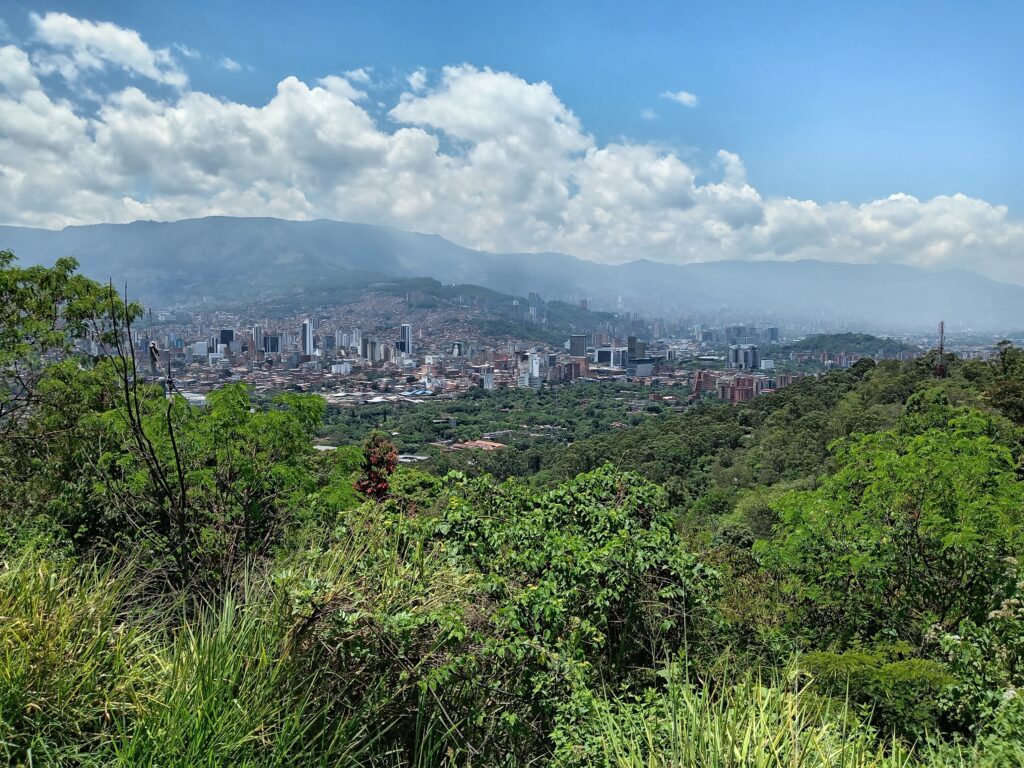
Unfortunately, things went downhill after that. I spent some time in Medellín, mostly trying to find accommodations. From there I moved on to Salento, for an even short visit, where I just gave up. I was supposed to see quite a bit more of Colombia, but I couldn’t take it anymore. Every time I moved to a new place it started with a search (of at least several days) to find a place to sleep, and eventually I had enough.
The Colombia I did get to see had good people, beautiful nature, and a history I didn’t fully understand. I wish I could explore more, and maybe in the future I will, but unfortunately this time, the adventure was cut short